


The legal system constantly evolves, shaped by landmark court cases that redefine justice and fundamental rights. Some trials have had profound effects, not only on the individuals involved but also on society as a whole.
Brown v. Board of Education ended segregation in public schools, while Miranda v. Arizona established critical protections for individuals questioned by law enforcement. These cases demonstrate how the courts uphold freedoms and adapt to changing social and legal landscapes.
Understanding these historic trials provides insight into how legal decisions shape society, ensuring justice remains dynamic and responsive. Law Insider Daily explores these influential cases and their lasting impact.
What Are Historic Trials?
 Historic trials mark key turning points in legal history. They offer a deeper understanding of past injustices, societal shifts, and the evolution of laws that govern our daily lives.
These cases expose systemic issues, push boundaries, and redefine legal principles to reflect contemporary values. From the abolition of segregation to constitutional challenges on individual rights, these trials serve as legal milestones that influence generations.
Studying these cases reveals essential lessons about human rights, governmental power, and the balance between individual freedom and collective responsibility.
How Legal Precedents Shape Justice
Many historic trials have set legal precedents that continue to shape judicial decisions today. They provide a framework for courts to interpret laws and resolve conflicts. Legal precedents serve as guiding principles, ensuring consistency in legal rulings while adapting to new societal challenges.
For example, cases such as Marbury v. Madison (1803) and United States v. Nixon (1974) reinforced the judiciary’s role in checking governmental power. Others, like Plessy v. Ferguson (1896), demonstrate how legal decisions can uphold injustices—until later cases, such as Brown v. Board of Education (1954), overturn them.
Early Cases That Defined Law
The early years of the U.S. legal system set the foundation for constitutional interpretation, civil rights, and the balance of power among government branches. These cases established fundamental principles that still influence modern law.
Marbury v. Madison (1803) – Establishing Judicial Review
This case granted the Supreme Court the authority to interpret the Constitution and declare laws unconstitutional. Chief Justice John Marshall ruled that the judiciary has the power to check legislative and executive actions, reinforcing the system of checks and balances.
Dred Scott v. Sandford (1857) – A Case of Injustice
This infamous ruling denied citizenship to African Americans and declared that Congress could not ban slavery in U.S. territories. While later overturned by the 14th Amendment, the case reflected deep racial inequalities and the legal system’s role in upholding oppressive structures.
Plessy v. Ferguson (1896) – Upholding Segregation
The Supreme Court upheld racial segregation under the “separate but equal” doctrine. This ruling stood for decades until Brown v. Board of Education dismantled segregation in 1954, proving how the law can change over time.
Legal Milestones of the 20th Century
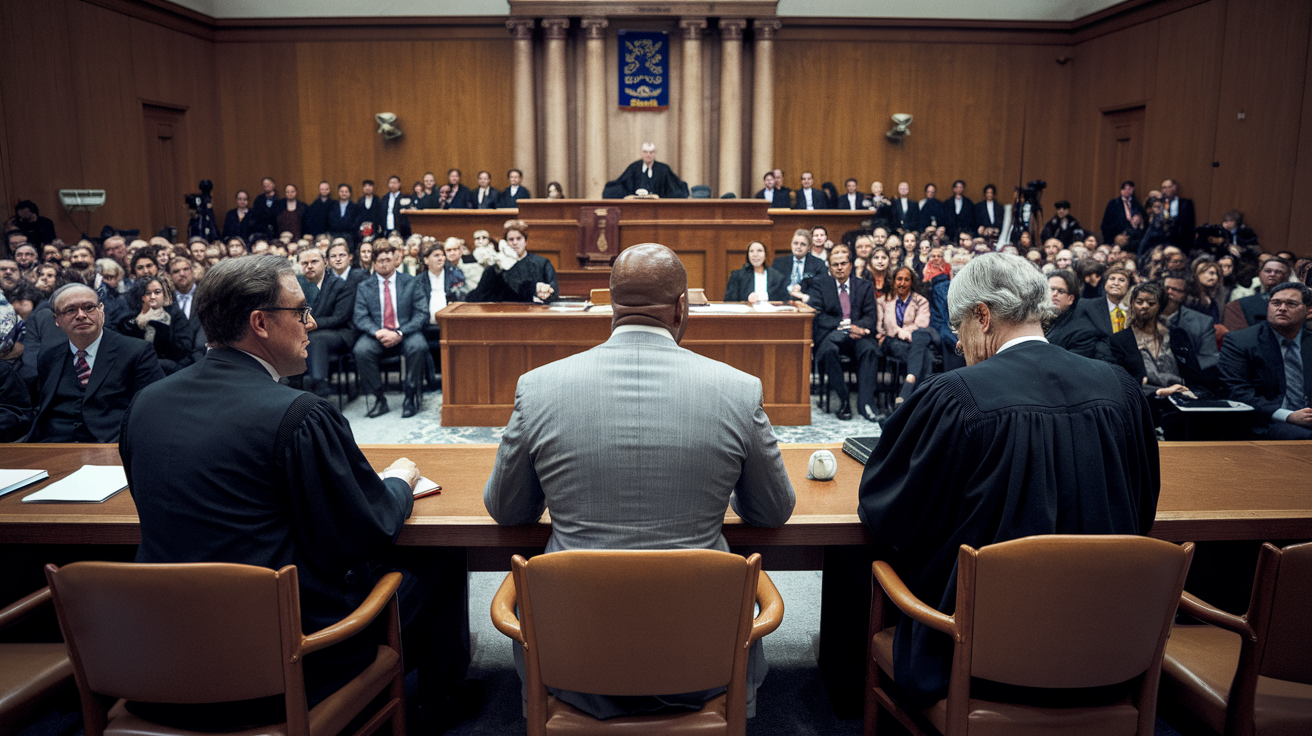
As society progressed, the courts addressed pressing social and political challenges, leading to transformative legal rulings.
Furman v. Georgia (1972) – The Death Penalty Challenge
The Supreme Court ruled that existing death penalty laws were applied inconsistently, violating the Eighth and Fourteenth Amendments. This decision led to a temporary moratorium, forcing states to revise capital punishment procedures.
United States v. Nixon (1974) – Presidential Accountability
During the Watergate scandal, the Supreme Court ruled that executive privilege does not place a president above the law. This decision reinforced government transparency and set limits on presidential authority.
Batson v. Kentucky (1986) – Racial Discrimination in Jury Selection
This case ruled that racial bias in jury selection violates the Equal Protection Clause. Prosecutors could no longer dismiss jurors solely based on race, strengthening fairness in the legal system.
Bowers v. Hardwick (1986) – LGBTQ+ Rights and Privacy
The Court upheld a Georgia law criminalizing same-sex relations, reflecting societal attitudes of the time. It was later overturned by Lawrence v. Texas (2003), which recognized privacy rights for LGBTQ+ individuals.
21st Century Legal Challenges
The modern era has presented new legal questions, from digital privacy to reproductive rights and executive authority. The courts continue to shape these evolving debates.
Caniglia v. Strom (2021) – Fourth Amendment Protections
The Supreme Court ruled that police cannot conduct warrantless searches of homes under the community caretaking exception. This decision reinforced privacy rights, limiting government overreach.
Edwards v. Vannoy (2021) – Jury Unanimity and Retroactivity
This ruling determined that the requirement for unanimous jury verdicts in criminal cases does not apply retroactively. The decision sparked debates over fair trial standards and post-conviction relief.
Kahler v. Kansas (2020) – Mental Illness and Criminal Responsibility
The Court upheld Kansas’ law restricting the insanity defense, emphasizing state authority in defining legal responsibility. The ruling raised concerns about protections for defendants with severe mental illness.
Dobbs v. Jackson Women’s Health Organization (2022) – Reversing Roe v. Wade
This case overturned Roe v. Wade (1973) and Planned Parenthood v. Casey (1992), eliminating federal protections for abortion rights. The ruling shifted abortion policy back to the states, sparking nationwide legal battles.
Citizens United v. FEC (2010) – Redefining Campaign Finance
This decision removed restrictions on corporate political spending, ruling that financial contributions are a form of free speech. The ruling significantly changed election funding and raised concerns about corporate influence in politics.
The Lasting Impact of Historic Trials
Legal decisions extend beyond the courtroom, influencing policy, civil rights, and societal norms. The cases discussed demonstrate how the legal system adapts to new challenges while reflecting shifts in public opinion and ethical standards.
From ending segregation to reshaping privacy laws, each ruling contributes to a broader legal landscape. These trials underscore the importance of legal advocacy, public awareness, and judicial integrity in shaping a just society.
Why Understanding Legal History Matters
Studying these cases helps us recognize how laws evolve to protect rights, correct past injustices, and set standards for future generations. By examining legal history, we gain a deeper understanding of justice in action—and the ongoing efforts needed to uphold it.
Stay informed with Law Insider Daily for more insights into historic cases, legal analysis, and the latest judicial decisions.
